
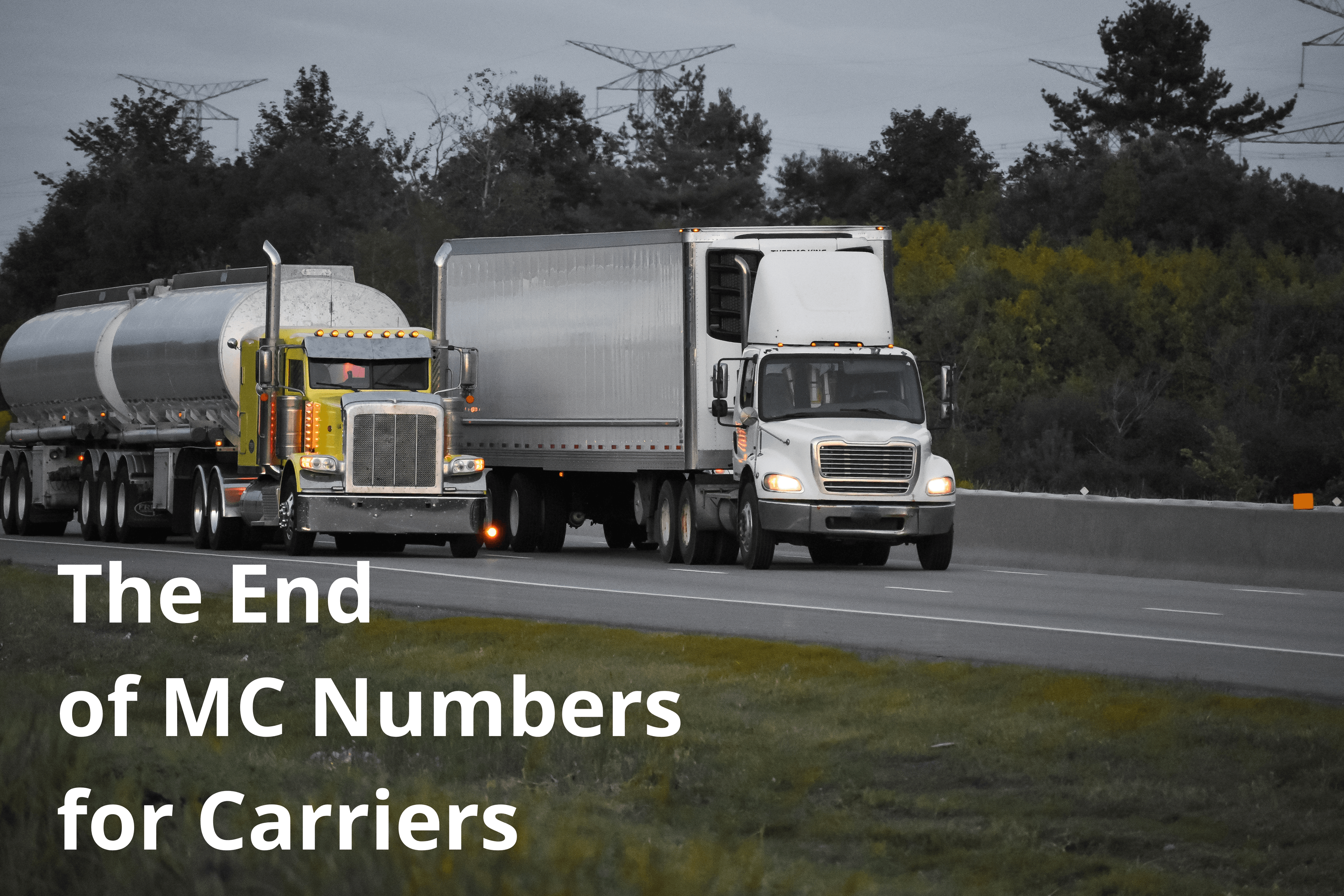
The Federal Motor Carrier Safety Administration (FMCSA) stopped using MC (Motor Carrier) numbers on October 1, 2025. Instead, they will exclusively use USDOT numbers. This change in the rules is more than just an update to the paperwork, it changes the way carriers, brokers, and freight forwarders are identified, tracked, and regulated by the federal government.
For many years, companies in the transportation industry have used two numbers: an MC number for operating authority, and a USDOT number for safety and compliance. The FMCSA’s goal with these changes is to simplify the registration process, reduce fraud, and improve oversight across the industry.
Why FMCSA Is Phasing Out MC Numbers
For many years, the Federal Motor Carrier Safety Administration (FMCSA) followed a dual system of IDs, which included the following:
- MC numbers for businesses that are authorized to operate on the interstate highway system (including freight forwarders, brokers, and motor carriers).
- Numbers assigned by the United States Department of Transportation (USDOT) for monitoring safety performance, compliance, and inspections.
In spite of the fact that it was functional, this two-number system frequently resulted in confusion, duplication, and inefficiency. Both numbers were required to be kept up to date in the filings, contracts, and compliance systems of the carriers. Even though the United States Department of Transportation number was the fundamental backbone of safety regulation, brokers and shippers still relied on MC numbers for verification.
USDOT Number Replaces the MC Number
By eliminating MC numbers, the FMCSA is working to create a unified and streamlined identity. Following the completion of the transition, all authority designations, including those for motor carriers, brokers, and freight forwarders, will be directly linked to the United States Department of Transportation number. These designations will frequently be accompanied by distinguishing suffixes or authority kinds.
The most important thing to note is that your USDOT number will continue to be active and will take over all of the functions that the MC number was previously responsible for, including insurance filings and broker-carrier agreements. This transition helps the Federal Motor Carrier Safety Administration (FMCSA) increase enforcement and prevent fraudulent behavior inside the registration system.
Timeline & Key Milestones
Slowly, the Unified Registration method (URS) is moving away from MC numbers and toward a method that is only used by the US Department of Transportation. Carrier, dealer, and freight forwarders will have time to get used to the new rules thanks to a plan set up by the Federal Motor Carrier Safety Administration (FMCSA).
Key milestones include:
- November 2023 – URS Rollout Begins
New applicants started joining up under rules that were only open to USDOT, even though the old MC numbers were still valid.
- 2024 – Transition Period
FMCSA systems started to work at the same time as carriers changed their paperwork, insurance, and contracts. They did this by getting numbers from both the Marine Corps and the US Department of Transportation.
- Early 2025 – Sunset Phase
The FMCSA has begun to remove references to MC numbers from its files, notices, and records. Carriers and dealers were supposed to change their MC numbers to match their USDOT identities in all of their systems, both inside and outside of work.
- October 1, 2025 – Full Decommission
After this point, FMCSA will no longer accept MC cards. The United States Department of Transportation number is now the only way to know if something is safe, legal, or in line with the rules.
Stay Updated
Because regulatory rollouts can shift, FMCSA advises stakeholders to monitor:
- Official FMCSA notices and the Federal Register
- Unified Registration System (URS) announcements
- Compliance alerts from trusted regulatory partners or consultants
You won't miss a date or risk your operational authority if you take the initiative.
Steps & Checklist to Prepare - Before October 1
It might feel like a big change to get rid of MC numbers, but if you plan ahead, the process can go smoothly and quickly. For carriers, agents, and freight forwarders, here is a useful list to help them through the process:
1. Verify and Update Your USDOT Number
- Check that your USDOT number is active in the FMCSA database.
- Check and update the company's information, such as its address, phone number, and email address, to make sure it is correct.
- Even if there haven't been any changes, you still have to turn in your MCS-150 Motor Carrier Identification Report every 24 months.
2. Audit Internal and External Records
In the following documents, substitute your USDOT number for all references to your MC number:
- Documents pertaining to compliance and safety manuals
- Files pertaining to insurance and BOC-3
- Agreement between brokers and carriers, as well as rate confirmations and contracts
- Systems for dispatching, charging, and managing fleets of vehicles
- Signatures for electronic correspondence, business cards, and directories found online
3. Notify Partners and Stakeholders
- Inform your business partners, shippers, agents, and insurers about the change ahead of time.
- Make it clear that the USDOT number will be your only government ID number after October 1, 2025.
- Update papers that people will see so that clients don't have to use old MC number references.
4. Monitor FMCSA Announcements
- Stay connected to FMCSA’s URS updates and Federal Register notices.
- Sign up for compliance alerts or newsletters from trusted industry consultants.
- Keep a calendar of important deadlines to avoid lapses in authority.
Looking Ahead
The end of MC numbers means the end of a long-standing system, but it also means growth. By switching to a structure that only includes USDOT, FMCSA is trying to make the transportation industry's system cleaner, less likely to be hacked, and more open. Carriers, brokers, and freight forwarders can move into this new age of compliance with confidence if they plan ahead of time.